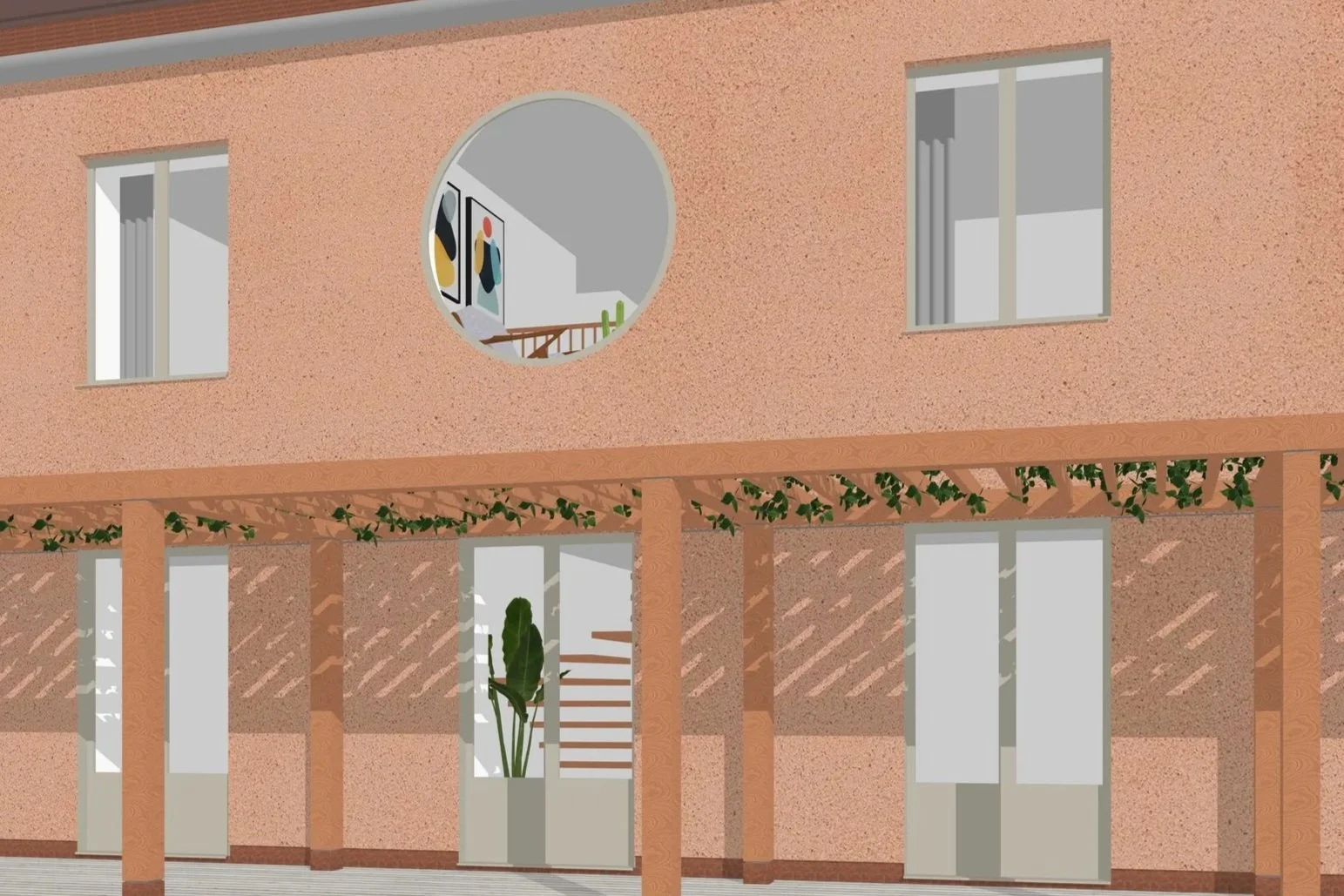
Located on the southern edge of Lymington, the house sits on land historically used for horticulture as part of a cherry orchard. The site forms part of the wider Strategic Site allocation, with new residential development emerging to the north and the historic orchard landscape beyond to the south.
Replacing an existing converted agricultural barn, the new dwelling is conceived as a contemporary family home that responds carefully to its evolving context. The two-storey house addresses the new access road and neighbouring development to the north, while the garden opens to the west, south and east, maintaining a strong relationship with the surrounding landscape.
The architecture draws from the local vernacular and the character of the adjacent neighbourhood. A simple gable to gable form reflects the pitched roof typology of nearby homes while establishing a clear and distinct identity. Retained alder trees along the northern boundary provide a natural separation from neighbouring development and contribute to the landscape setting of the site.
Facing materials reference the tones and textures found across the Lymington and Pennington coastal plain. Terracotta clay render complements the mottled brickwork of the adjacent estate, while red-brown clay plain roof tiles echo traditional roofing materials in the area. Generous windows and French doors allow daylight deep into the plan and create strong visual connections to the garden.
Supporting outbuildings include a timber-clad workshop and double carport, with timber from the existing barn reused where possible to retain a link to the site’s agricultural past.
The house is designed with a fabric first approach using structurally insulated panels (SIPs) to create a highly insulated and airtight envelope. Triple-glazed windows, an air source heat pump and roof-integrated photovoltaic panels combine to deliver a comfortable, energy-efficient home designed for sustainable modern living.
The Cherry Orchard